Report: How Women’s Museums Promote Access to Justice for Women and Girls
April 6, 2026
Exhibition & Cultural Programme
August 18, 2026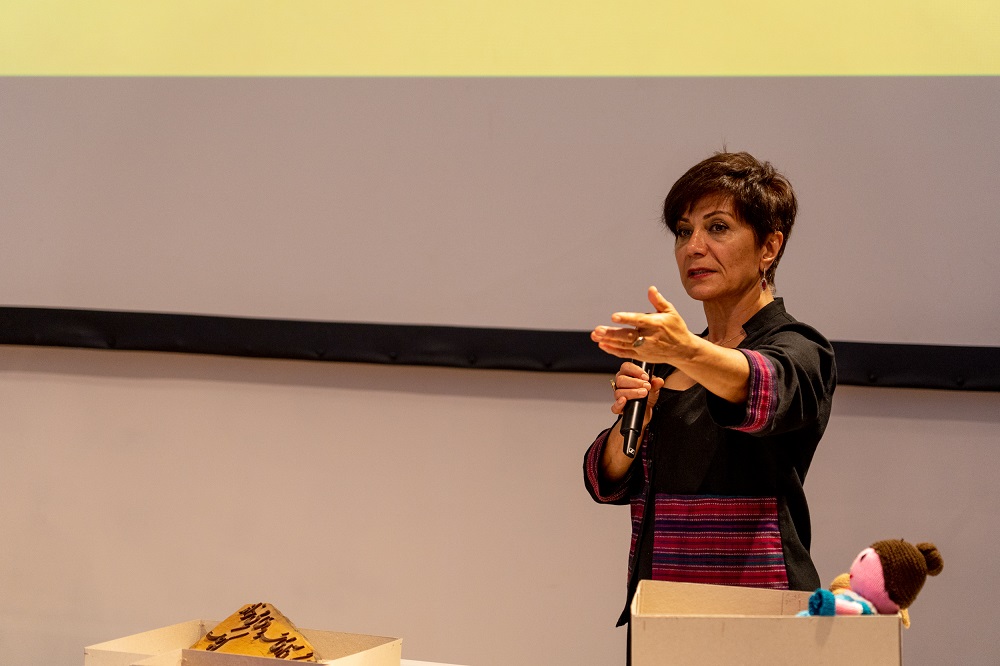
Source: artisaretreat.org
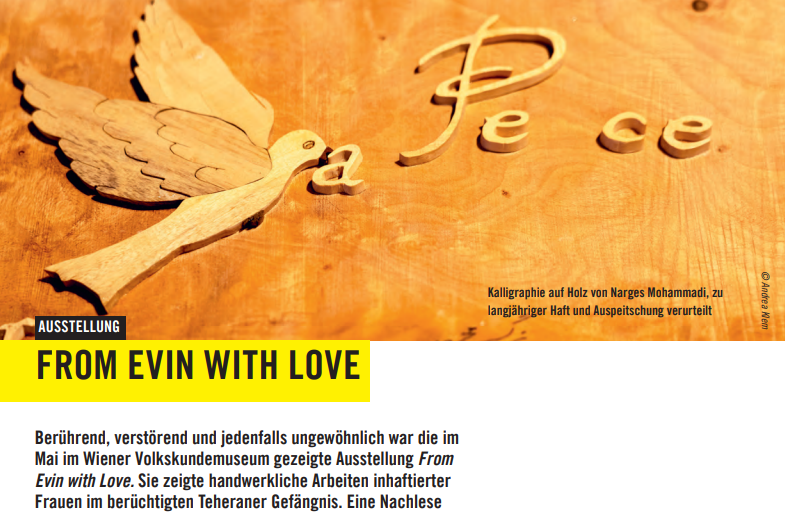
Last spring, Iranian researcher and activist Mansoureh Shojaee visited Artisa to work on her book about her advocacy for Iranian women’s rights. Inspired by Nobel laureate Shirin Ebadi, Mansoureh founded the Iranian Women’s Movement Museum in 2008, collaborating with activists, artists, and academics. The project was halted in 2009 after a raid on her home by Evin Prison agents, who confiscated her materials and imprisoned her.
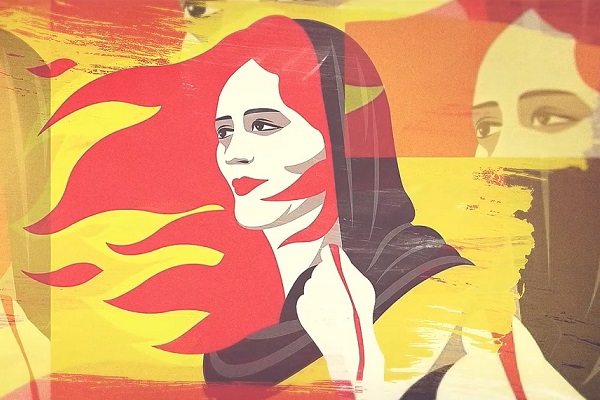
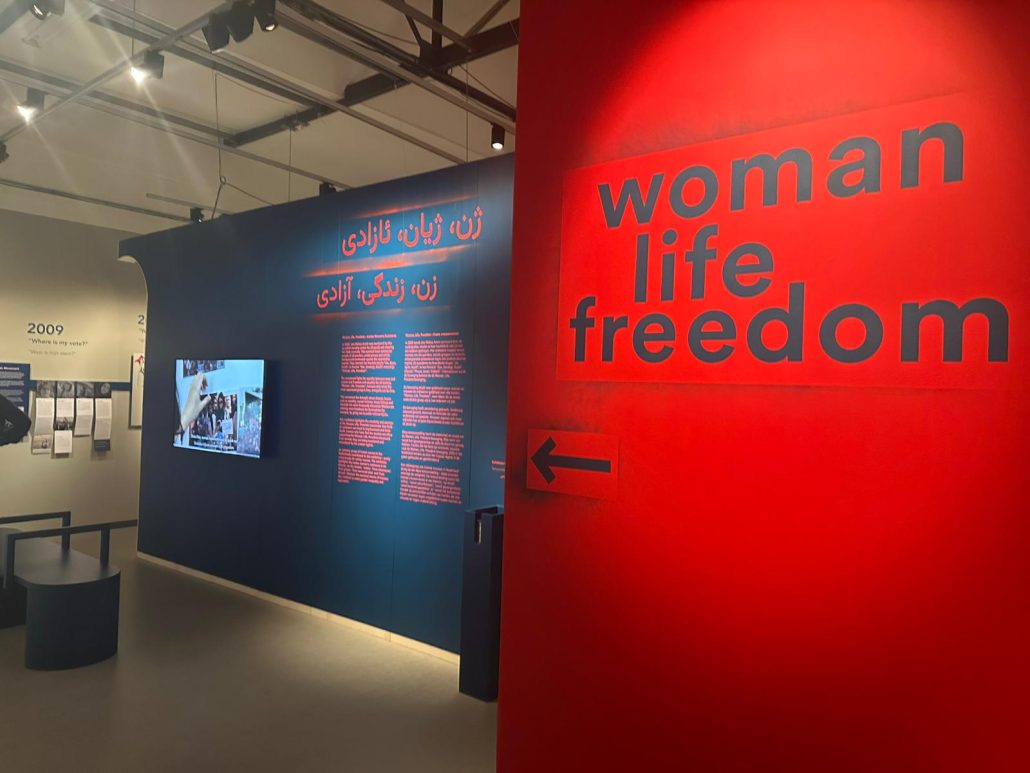
After her release in 2010, Mansoureh resumed her work, interning with the International Association of Women’s Museums and later partnering with Vrije Universiteit Amsterdam. This spring, she collaborated with the Women, Life, Freedom movement on an exhibition at Amsterdam’s Resistance Museum. The exhibition is open until August 2026.
Now, it’s time to hear from Mansoureh herself.
A Life in Activism: From Iran to the Diaspora
I was born in 1958 into an intellectual family critical of the Pahlavi monarchy. My mother, active in the Women’s Association for Young Women and Ladies, took me to meetings where women—modern and veiled—gathered to discuss their concerns. My father, an army officer, opposed corruption and warned against the rise of an Islamic regime. My older brother, a leftist student, taught me to think critically. Together, we sympathized with the Fedayian organization, though we remained independent.
In 1977, I entered university and began working at the National Library. During the 1978 revolution, I joined strikes by cultural institution employees, securing a permanent librarian position. I participated in the 1979 anti-compulsory hijab protests, meeting women from the Fadaian organization. After universities closed during the so-called “Cultural Revolution,” I focused on women’s rights, joining the National Union of Women of Fadaian.
Three Phases of Feminist Activism
The first phase began after the Iran–Iraq War and the 1988 mass executions. Women, separated by repression and war, reconnected in private homes to read feminist texts, watch films, and organize trips—taking leadership roles traditionally held by men. My passion for nature led me to the board of the Women’s Association Against Environmental Pollution.
The second phase came during the reform era. In 2000, we publicly celebrated International Women’s Day for the first time since 1979, with over a thousand attendees. I spoke on ecofeminism, and we founded the Women’s Cultural Center, Iran’s first secular feminist organization. By 2003, after Shirin Ebadi’s Nobel Prize, we launched the Women’s Convergence coalition, organizing events to challenge discriminatory laws.
The third phase saw the One Million Signatures Campaign (2006) and a coalition to reform family law (2007). We also launched the Feminist School website. In 2008, I began planning a museum of the Iranian women’s movement.
Exile and the Women’s Movement Museum
Upon arriving in Europe, despite the fatigue and trauma of prison, at the age of 53, I began learning directly how women’s museums are run through the International Association of Women’s Museums, with visits and short courses at museums in Nuremberg, Kongswinter, Bonn, and Merano.
From 2011 to 2013, I collaborated with PEN International through the “Writer in Exile” fellowship program. In 2014, at the age of 56, I received a Scholar at Risk fellowship and entered the Erasmus University Rotterdam’s Institute for Social Studies for a master’s program, sitting alongside students the same age as my son.
In 2017, I joined the Department of Social Sciences at the Vrije University of Amsterdam as a visiting researcher, with support from Professor Haleh Ghorashi. There, I advanced the Iranian Women’s Movement Museum project, opening the first exhibition in 2018. Since then, I have organized six exhibitions in six countries.
Challenges and Risks
My work faces both internal and external challenges. Internally, the volume of activism—writing, interviews, and advocacy—often overwhelms me. For example, I wrote 20.000 words in two weeks at Artisa, but in the following ten months, only 10.000, as crises in Iran demanded my attention. This is largely due to the nature of my life: while I am writing, I suddenly receive news that a friend has been arrested, another has been banned from working, someone else forbidden to leave the country, or that someone has been executed. I feel obligated to write, give interviews, and speak out.
Externally, I must protect collaborators in Iran. I focus exhibitions on art rather than politics and carefully choose partners to shield everyone involved. This caution limits my freedom and financial options, but it is necessary for safety.
Research and Methodology
My book, A Museum of Our Own, explores the Iranian Women’s Museum as a site of cultural memory and feminist activism. It integrates gender studies, museum studies, and Iranian cultural history, using fieldwork, interviews, and archival research. This interdisciplinary approach fills a gap in scholarship on non-Western feminist museums, offering insights into memory, diaspora, and cultural preservation.
What I Hope Visitors Will Take Away
I want visitors to leave with a sense of tragic pleasure—a deep, bittersweet emotion that blends beauty with sorrow. I hope they carry with them the stories of Iranian women political prisoners, not just as history, but as a call to action. My wish is that they feel compelled to share these stories, to remember their own human duty, and to stand in solidarity with those still fighting for justice.
The Future: A Shadow of War
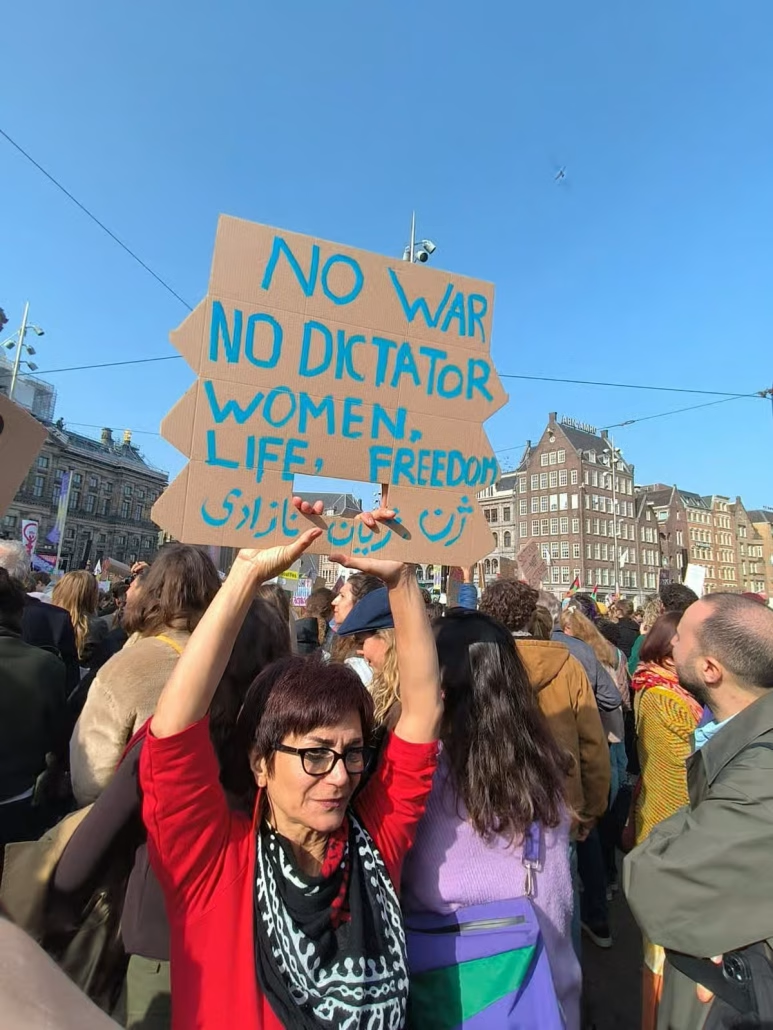
In the midst of this devastating war, which began in March in defiance of international law, we do not even know what tomorrow holds. The future feels stolen. Trapped in a war my land, my son, my family, my comrades and I live in uncertainty. Missiles and airstrikes from the U.S. and Israel, combined with the Islamic Republic’s repression, have shattered civil society. The “Woman, Life, Freedom” movement—one of the world’s most creative and nonviolent feminist movements—has been silenced. War is the enemy of civilization; it leaves only death and destruction. As long as this war rages, I see no future for ourselves, for Iran, for the region, or for the world.
What can I do, even in the ‘safest land’ in the world, where I live (The Netherlands)... I weep alone — grieving my lost agency, fearing for my loved ones. The world’s silence is deafening.
Yet, we cannot remain silent. We have a duty to prevent crimes against humanity and to strive for lasting and sustainable peace. For those of us who survive, the fight for justice must continue—no matter how dark the present.
To Young Women and Activists
When asked what advice I would give to young women and activists, I don’t offer advice—I share the values that I have lived and experienced over forty years of activism:
Solidarity—stand united
Kindness—cherish and support one another
Bravery—face challenges with courage
Persistence—remain resilient
Nonviolence—reject hatred and destruction
Mutual Support—collaborate, don’t compete
Social Awareness—see the layers of society and act with empathy.
These principles are not just ideals; they are the foundation for building stronger communities and a just world. They have guided my life, and I hope they will inspire yours.
The exhibition is open till August 2026